Butter Chicken
5.0
(50)
Your folders
Your folders
Prep Time: 20 minutes
Cook Time: 25 minutes
Total: 45 minutes
Servings: 4
Author : Jennifer Segal
Ingredients
Export 14 ingredients for grocery delivery
Instructions
Step 1
Pat the chicken dry with a paper towel. In a medium bowl, sprinkle the chicken pieces evenly with ¾ teaspoon of the salt and 1 teaspoon of the garam masala; toss to coat evenly. Add the flour and toss again, making sure the chicken is well coated.
Step 2
In a large (12-inch) nonstick skillet, heat 1 tablespoon of the butter and the oil over medium-high heat. When the fat is hot and shimmering, add the chicken in a single layer and cook, without stirring, until the chicken is lightly golden on the underside, about 3 minutes. Using tongs, turn the chicken pieces over and cook until just cooked through, 2 to 3 minutes more. Transfer the chicken to a plate and set aside while you make the sauce (you’ll use the skillet in the next step—there’s no need to wash it).
Step 3
Melt the remaining tablespoon butter in the same skillet over medium heat. Add the onion and ginger and cook, stirring frequently, until softened, 3 to 4 minutes. If the onion starts to brown, reduce the heat. Add the coriander, cumin, cayenne (if using), and remaining teaspoon of garam masala; stir and cook 1 minute more. Add the tomato sauce, cream, sugar, pepper, water, and the remaining ½ teaspoon salt. Bring to a gentle boil, then reduce the heat and simmer, uncovered, until slightly thickened, about 3 minutes.
Step 4
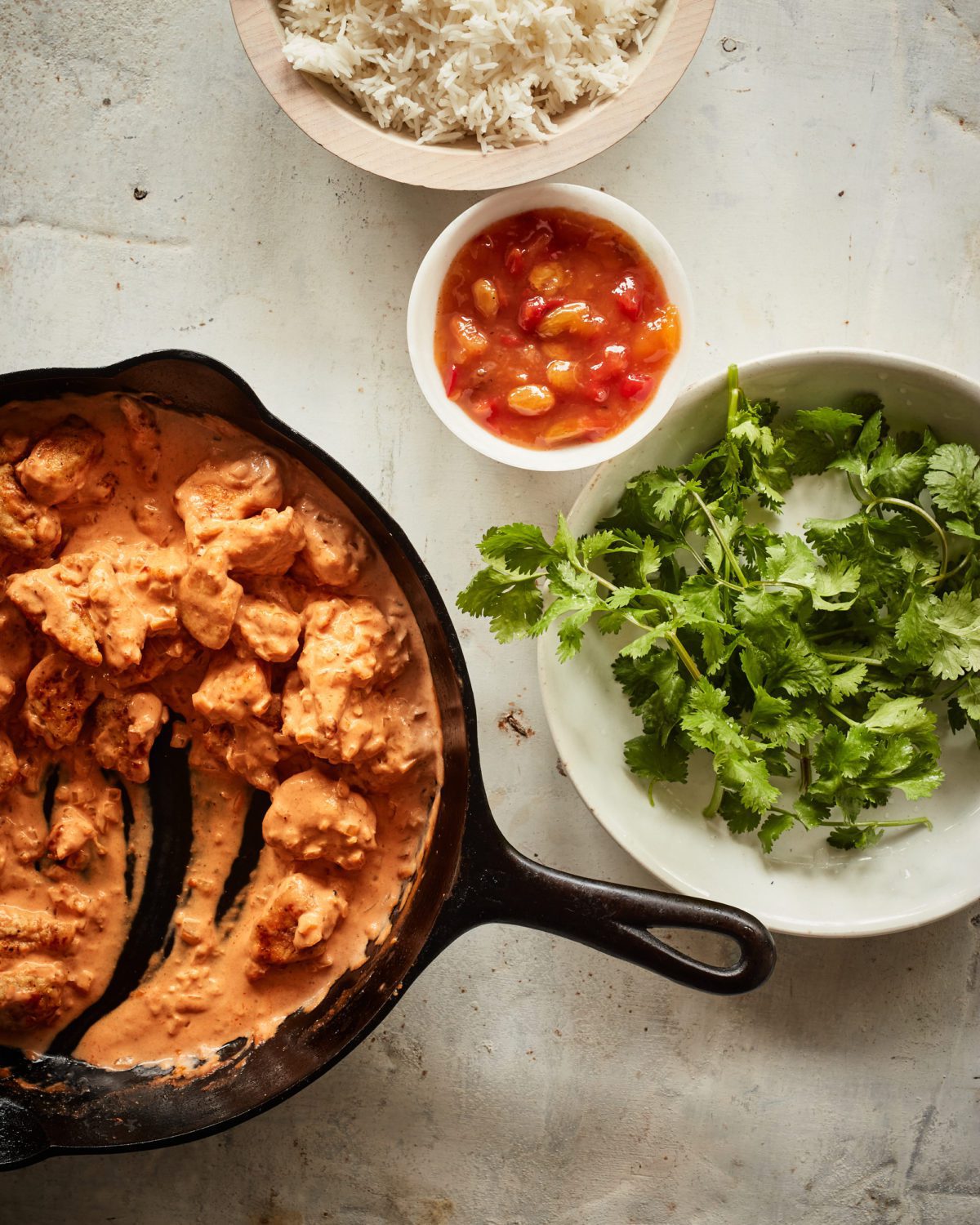
Add the chicken, along with any accumulated juices, to the sauce and simmer just a few minutes until the chicken is warmed through. Taste the sauce and adjust the seasoning if necessary. Sprinkle with the cilantro, if using, and serve with basmati rice and mango chutney. (Note that the sauce will thicken as it sits; thin with a bit of water if necessary.)
Step 5
Note: Chicken tenderloins typically have a white tendon attached to them. They can be a little tough to chew, so I like to remove them with kitchen shears before cooking. Just pinch the tip of the tendon with your finger and snip where the tendon meets the chicken.
Step 6
Note: Check out easy guidance on how to peel, grate, and chop fresh ginger here.
Step 7
Note: This dish is traditionally cooked with ghee, a type of clarified and fermented Indian butter that has a higher smoke point than plain butter. Since I don’t have ghee on hand in my kitchen and butter burns over high heat, I use a combination of butter and oil to get a similar effect (oil raises the smoke point of the fat and prevents the milk solids in the butter from burning).