Easy Homemade White Bread
Your folders
Your folders
Total: 480
Servings: 1
Ingredients
Export 3 ingredients for grocery delivery
Instructions
Step 1
Activate the yeast by adding ½ cup (125ml) of the warm water, the sugar and the yeast, stir it up and leave it to sit for 15 minutes or so until it is foamy.
Step 2
Add the flour and salt to the bowl of a stand mixer. Once the yeast is foamy, add this and the remaining warm water and milk and mix together until incorporated.
Step 3
Using either the dough hook on your stand mixer, or by hand on a lightly floured bench, knead the dough for about 10 minutes until it is smooth, elasticy and bounces back when pressed gently.
Step 4
Put the dough in a clean bowl, cover with gladwrap/clingfilm and put in a warm, draught free place to rise until approximately doubled in size. Depending on the temperature this will take between 1 ½ to 2 ½ hours.
Step 5
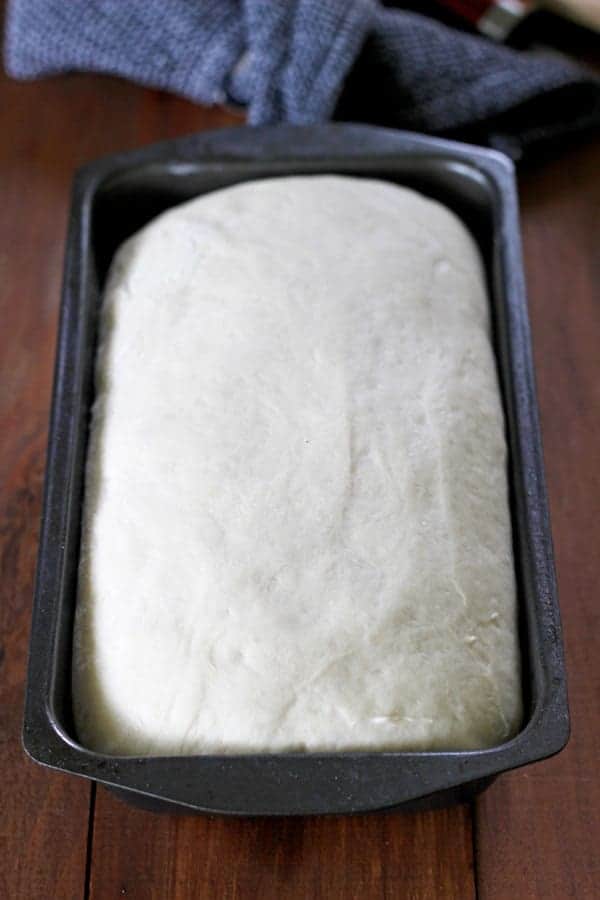
Oil or butter the loaf tin you will be using. I prefer to use butter as it gives the crust a bit of crunch and great flavour. Gently tip the dough onto a lightly floured surface and roll it out into a roll about twice the length of the loaf tin you will be using. Gently flatten it using your knuckles and then fold it into thirds length ways, like a letter. Flatten it out again until it is about the length of two thirds of the loaf tin, and then roll it up from the long side, towards you into a tight roll. Make sure it is rolled firmly, but don't stretch or break the dough. Transfer the loaf, seam side down into the loaf tin.
Step 6
Cover the loaf again, but I like to use a supermarket bag so that it is not touching the dough and to give it enough room to rise slightly above the top of the tin without touching the bag.
Step 7
Put it in the same warm place to rise until it is round on top and just over the top of the loaf tin. It is ready when the loaf will resist slightly when you gently press down with your finger but will still spring back into shape. This step will take about 30-40 minutes. Once you have left this to rise, pre-heat your oven to 230°C.
Step 8
Once the bread has risen, put it in the oven. Bake for 10 minutes at 230°C and then reduce the heat to 200°C and continue baking for a further 20-30 minutes until the loaf is golden brown on the top, bottom and sides and sounds hollow when you tap the bottom. I always take the loaf out and remove it from the tin so that I can check that it's properly cooked. It's easy to put it back in at this stage if you think it needs a little longer. If while baking the top is going a little too brown, gently cover it in tinfoil to stop it from browning too much.
Step 9
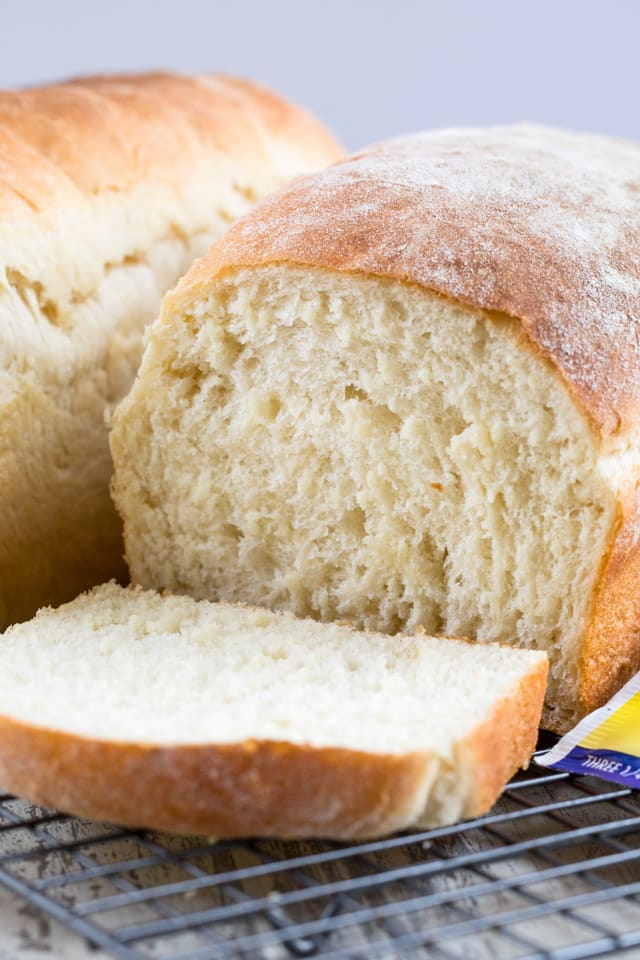
Remove from the oven and the tin and cool on a wire cooling rack before slicing and serving.
Step 10
Store in an airtight container at room temperature for a few days or slice and freeze the loaf.
Top similar recipes
Curated for youYour folders
 263 views
Easy Homemade White Bread
thekiwicountrygirl.com
4.5
(4)
40 minutes
Your folders
 1113 views
Homemade Bread (Homemade White Brea...
theflavorbender.com
5.0
(160)
45 minutes
Your folders
 113 views
Homemade Bread (Homemade White Brea...
theflavorbender.com
Your folders
 253 views
Homemade White Bread
spendwithpennies.com
5.0
(31)
45 minutes
Your folders
 272 views
Homemade White Bread
foodfolksandfun.net
5.0
(6)
30 minutes
Your folders
 552 views
Easy white bread
bbcgoodfood.com
30 minutes
Your folders
 513 views
Easy white bread
bbc.co.uk
4.4
(134)
1 hours
Your folders
 545 views
Easy white bread
simply-delicious-food.com
4.8
(12)
25 minutes
Your folders
 223 views
Homemade White Bread Loaf
ricardocuisine.com
5.0
(608)
25 minutes
Your folders
 229 views
Homemade White Bread Recipe
mindeescookingobsession.com
5.0
(23)
45 minutes
Your folders
 501 views
Best Homemade White Bread
thesouthernladycooks.com
40 minutes
Your folders
105 viewsBest Homemade White Bread
thesouthernladycooks.com
Your folders
 263 views
Homemade White Sandwich Bread
spicedblog.com
30 minutes
Your folders
 250 views
Homemade White Bread Recipe
crazyforcrust.com
4.9
(103)
20 minutes
Your folders
 182 views
Homemade White Sandwich Bread
amylearnstocook.com
Your folders
187 viewsHomemade White Sandwich Bread
amylearnstocook.com
Your folders
 196 views
Homemade Amish White Bread
gluesticksblog.com
4.4
(66)
30 minutes
Your folders
 351 views
Simple White Bread, Easy Homemade B...
jennycancook.com
30
Your folders
 214 views
Easy homemade bread
jamieoliver.com