Easy Kimchi Recipe for Beginners
Your folders
Your folders
Prep Time: 20 minutes
Total: 140 minutes
Servings: 3.5
Author : Holly Ford
Ingredients
Export 10 ingredients for grocery delivery
Instructions
Step 1
Cut a 3-inch slit through the white stem part of cabbage. Open up the cabbage from the white stem part using your hand. It should open up easily. Cut additional slits on each cabbage half on the stem and open up again. By doing so, you are quartering the cabbage the Korean traditional way. Rinse the cabbage quarters once to wet them.
Step 2
Dice cabbage quarters into large chunks. For the large outer leaves, slice them in half lengthwise first, then dice into chunks.
Step 3
In a large bowl, put in a small layer of cabbage chunks and sprinkle about 2-3 tablespoons of coarse sea salt over the cabbage. Repeat the process several times, creating layers of cabbage chunks and salt.
Step 4
Let the cabbage soak for 2 hours, turning them upside down a couple of times during the soaking. When you bend the white stem part of cabbage, if it bends with a gentle pressure, the brine step is completed. Rinse the cabbage 3 times in water. Drain the cabbage in a colander, pressing down gently to remove excess water.
Step 5
Combine onion, garlic, ginger, salted shrimps, fish sauce, cooked rice (or other choice of starch), and fruit in a blender. Pour in sea kelp stock (or water) to allow the blade to mix the ingredients. (If using fruit nectar, you don't need to add stock.) Process everything until smooth.
Step 6
Pour the puree in a large mixing bowl. Add Korean chili flakes, and mix well. Taste and adjust the seasoning for your liking. Let the paste rest for 5 minutes, so the chili flakes will get re-hydrated.
Step 7
Put the drained cabbage in a large mixing bowl. Add leek (or green onion), and fresh chili (if using). The add your kimchi seasoning paste to the cabbage.
Step 8
Mix well to coat the cabbage with the seasoning paste. (Wear kitchen rubber gloves to protect your hands from getting stained or smelly.)
Step 9
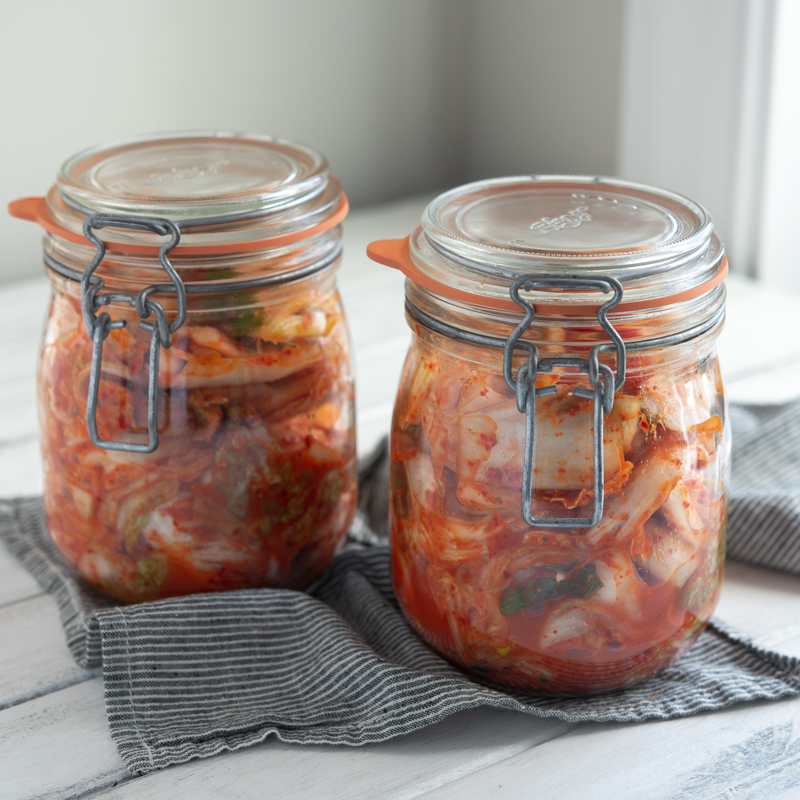
Put kimchi in an airtight glass food storage jar(s). Let it sit in a room temperature for 1 day (or as long as 2 days, depending on the temperature). When you see a gas foaming and air bobbles appear, transfer your kimchi to the refrigerator and store it for 4-5 days before you serve. It will last in the fridge for up to 2 months.