French Head Cheese, Fromage de Tete
5.0
(4)
Your folders
Your folders
Prep Time: 30 minutes
Cook Time: 360 minutes
Total: 390 minutes
Servings: 10
Ingredients
Export 12 ingredients for grocery delivery
Instructions
Step 1
Once your pig head has been skinned, or is otherwise ready, put it in a large pot and cover with cool water. Add the ears if you have them, or a pig's foot or two; you want these appendages because they add a lot of collagen to the broth, which helps everything set later. Turn the heat to medium-high, cover the pot and bring it to a simmer. Skim any scum that floats to the surface, then add all the herbs and spices and vegetables. Pour in the vinegar, too. Simmer this very gently -- the surface should just shimmy rather than boil -- until the head basically falls apart. Definitely 3 hours, and probably closer to 5 or 6.
Step 2
Now you have the awesomely fun job of picking everything off this dead pig's head. It's actually kind of a pleasant surprise to see how much actual meat is on the thing, but remember you also want fat and some cartilaginous bits, too. My rule: The weirder it looks, the smaller it gets chopped. Cheeks and other bits of meat I chop rather roughly, and the tongue -- after it's been peeled, of course -- gets cut into the largest pieces of all.
Step 3
I generally toss stringy tendons, the eyeballs (although the fat behind the eye is awesome), the palate, and any random bits I can't really identify.
Step 4
Put all this in a bowl and add the quatre epices. Mix well and turn your attention to the broth.
Step 5
Take about a quart of the broth, strain it and put it into a pot with the wine. I used vermouth here, as this is a French fromage du tete. Boil the crap out of it until the liquid reduces by a little less than half.
Step 6
Put all the meat and such into the pot. Now you add salt -- finally, right? You may need a solid tablespoon, but start small. Taste the mixture: You want it to be a little salty and slightly acidic. Add some more red wine vinegar if you want to; I added about 2 tablespoons. Simmer gently for another 15 minutes. This infuses all the yummy bits with the collagen-rich broth.
Step 7
Remove all the yummy bits with a slotted spoon and pack into a loaf pan or terrine pan. Make sure it's nice and even in the pan. Pour enough of the reduced broth to fill any crevices in the fromage, plus enough to pool just a little on the top of the meat. Now cover the fromage and let it chill in the fridge overnight to set.
Step 8
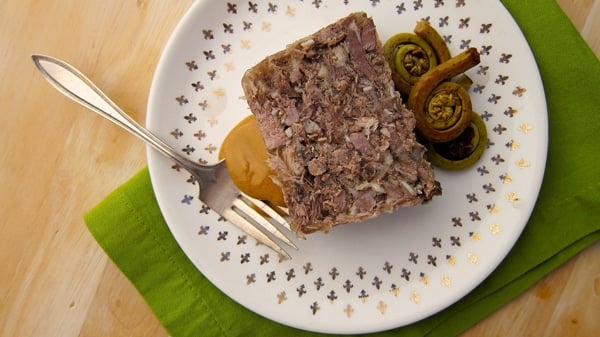
Eat with mustard and pickled things. Sauerkraut and bread are good combinations, too, if you want to be more Germanic -- remember Alsace-Lorraine is basically a hybrid of the two countries if you are worried about feeling authentic. Covered, the fromage will keep for a week to 10 days. It does not freeze well, however.