Homemade Cold-Pressed Coconut Oil
5.0
(13)
Your folders
Your folders
Prep Time: 20 minutes
Total: 2900 minutes
Servings: 24
Ingredients
Export 1 ingredients for grocery delivery
Instructions
Step 1
Making coconut cream, using one of these two methods - you can use a food processor or a juicer.While a food processor method is more accessible to most, the juicer method will be faster and yield better results.
Step 2
Once the coconut cream is ready, pour it into your designated container.
Step 3
It's time to 'ferment' the cream in order to get rid of excess water and separate the curd from the oil. You can pour the coconut cream into a bowl or jar, cover it, and keep it in a warm spot for 1-2 days. You can also wrap it with a big towel or a blanket. This is a method similar to when making yogurt - we are looking for a slightly warm environment (35-40ºC/95-105ºF) that will help with fermenting the coconut in order for the oil to separate.
Step 4
After a while, curds and oil will become separated. The oil will be on top, the coconut curds will be in the middle (refer to the photos in the blog post). At the bottom of your container, you will have some mirky water which you can discard or use in soups. Keep in mind that the water will have a slightly fermented flavor.
Step 5
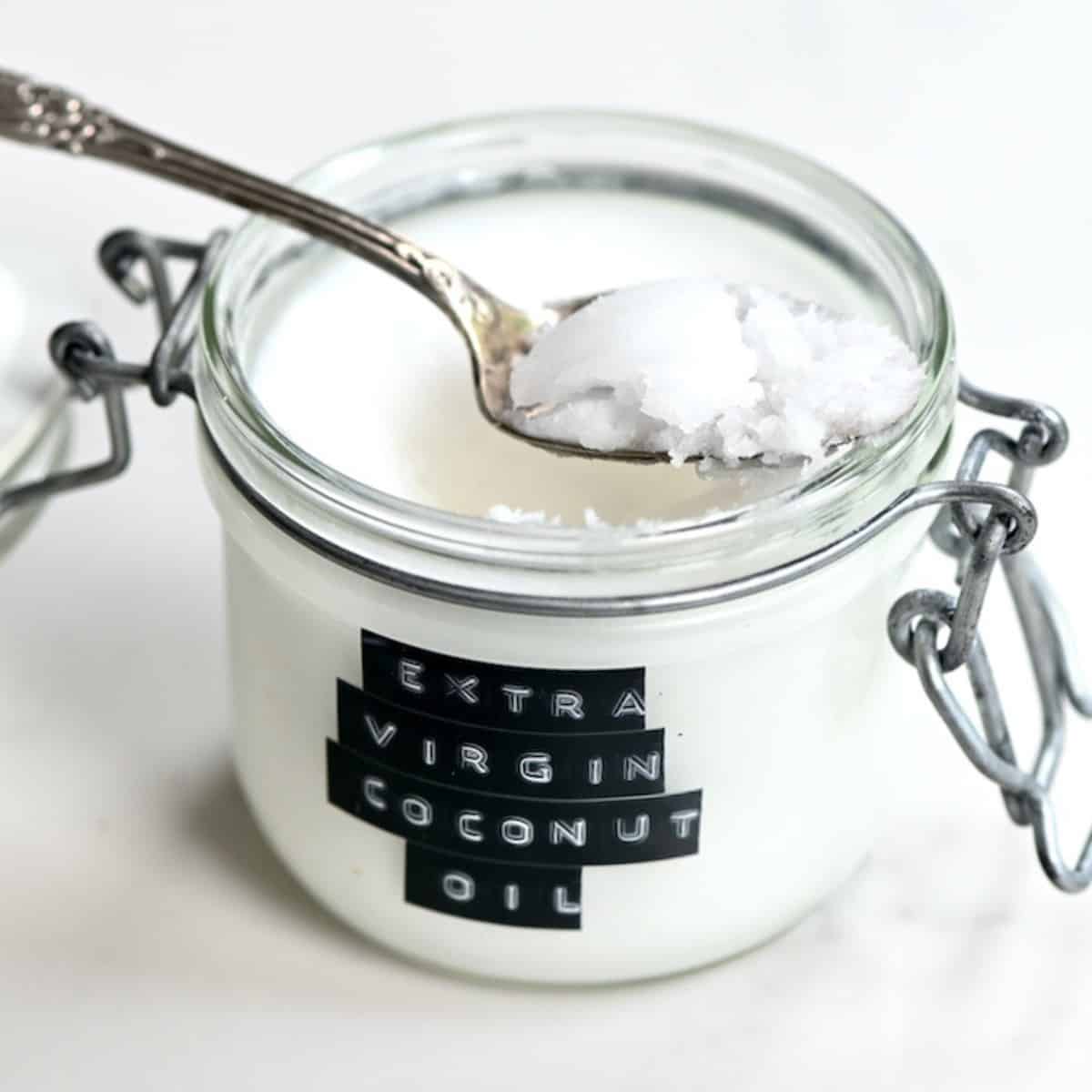
You should be able to easily spoon out the oil - though this requires some patience. Make sure to scoop only the oil and none of the curd. You can pour the oil directly into a clean/sterilized airtight container.Alternatively, you can also filter the oil through a sieve/nut milk bag. I find that dripping the coconut oil through a coffee filter works well as well (refer to the images on the blog post). You can place the curds directly into the filter and the oil will drip out into your container. Keep in mind that some oil will remain on the filter.Voila, you have your Extra Virgin Coconut Oil.
Step 6
Homemade coconut oil is shelf-stable and can be stored at room temperature. Most store-bought options have a long shelf life of around two years. While homemade won't last as long, it should still last a few months when sealed in an airtight jar between uses.If you notice the coconut oil yellowing or starting to look almost 'curdled', often with a bad smell, then your coconut oil has turned rancid. It can also grow mold - which will look like little green or brown dots- so watch out for that. If you find any of these signs then, unfortunately, the whole jar is no longer okay to use.