How To Make A Sourdough Starter From Scratch
4.4
(126)
Your folders
Your folders
Author : Lisa Bass
Ingredients
Export 1 ingredients for grocery delivery
Instructions
Step 1
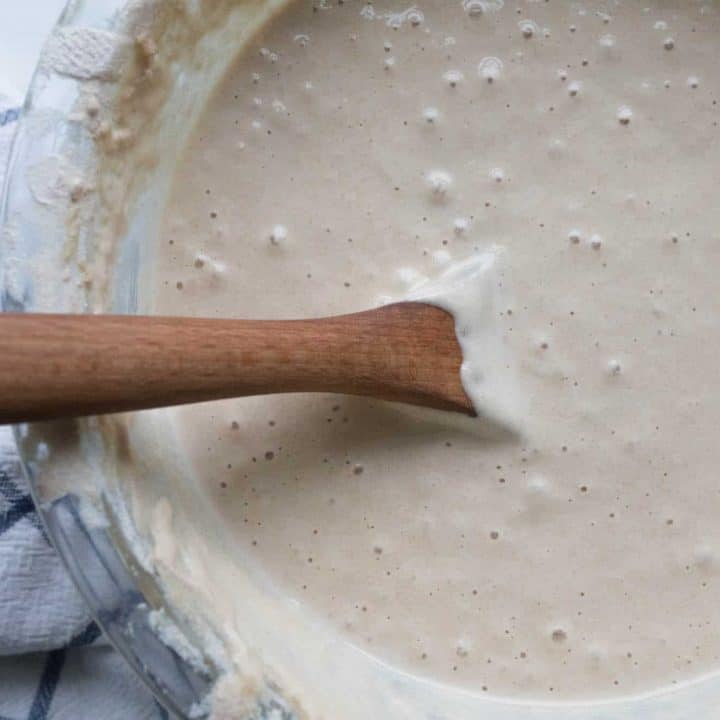
On day one, mix one cup of flour and one cup filtered water. Stir vigorously, making sure to scrape down the sides and incorporate everything. Place a clean tea towel over the bowl and set aside. Allow it to sit for 24 hours.
Step 3
On day two, discard half of the mixture and repeat the process. Add one cup flour, one cup water, stir vigorously, and cover.
Step 5
Why do you have to remove half the mixture? By day four, you would have sourdough starter overflowing from your bowl. Also, removing half ensures the right amount of flour and water is feeding the growing colony of beneficial yeast. If you weren’t discarding half, the half cup of flour wouldn’t be enough to feed them on days three and four. Basically, you would end up with a lot of extra starter by the end of the process, and none of it mature.
Step 7
Repeat the day two instructions for days three, four, and five.
Step 9
On days six and seven, do the same but feed it every 12 hours, instead of every
Step 11
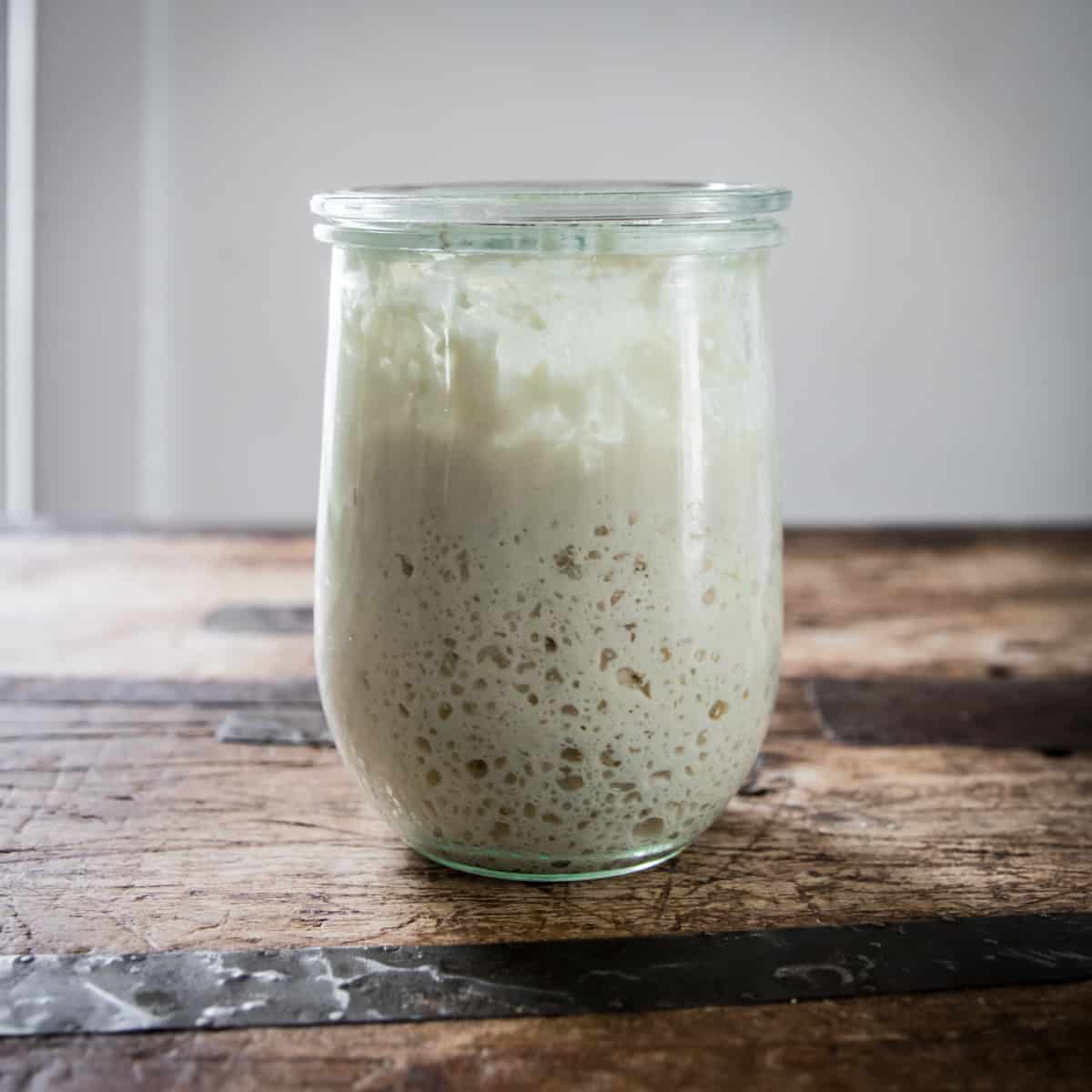
By day seven, there should be enough beneficial bacteria and yeast present to bake sourdough bread and other fermented sourdough goodies, like pancakes and english muffins.
Step 13
You will know it’s working if it bubbles, and doubles in size.
Step 15
SOURDOUGH STARTER MAINTENANCE
Step 16
Once your sourdough starter is alive and active, there will be some maintenance to keep it going for years and years.
Step 18
IN THE REFRIGERATOR FOR OCCASIONAL USE
Step 19
Storing it in the refrigerator slows down the fermentation process, so one feeding every week, or every other week, is sufficient.
Step 21
I usually use my starter a couple times per week. If I plan to make pancakes Saturday morning, for example, I pull my starter out of the fridge Friday morning and add flour and water. By Saturday morning it is bubbly and ready to go. I remove the two cups of starter needed for my pancake recipe and put the “master starter” back in the fridge. Since it was fed the day before, it is good to go for another week, or whenever I need it next.
Step 23
ON THE COUNTER FOR DAILY USE
Step 24
Since the “little guys”, as my kids like to call the bacteria in the starter, are active at room temperature, they will have to be fed more often if kept in this state.
Step 26
If you leave your starter out on the counter, you will need to add flour and water every day. You will also have to be baking daily to use up all that starter.
Step 28
Most people probably won’t use the starter quite so much, unless you own and operate a bakery. I would recommend storing it in the refrigerator between uses.
Top similar recipes
Curated for youYour folders
 106 views
How to Build a Sourdough Starter fr...
alexandracooks.com
4.9
(18)
Your folders
122 viewsHow to Build a Sourdough Starter fr...
alexandracooks.com
4.9
(18)
Your folders
 272 views
How to Make a Gluten-Free Sourdough...
homesteadandchill.com
4.9
(35)
Your folders
 72 views
How to Make a Gluten-Free Sourdough...
homesteadandchill.com
Your folders
 178 views
Sourdough Starter from Scratch
theduvallhomestead.com
4.3
(3)
Your folders
 146 views
How to Make A Yogurt Starter Cultur...
texasfarmsteadliving.com
1.0
(1)
Your folders
 266 views
How to Make a Sourdough Starter
pinchmysalt.com
4.3
(22)
Your folders
 210 views
How to Make a Sourdough Starter
ourgabledhome.com
4.9
(10)
Your folders
/__opt__aboutcom__coeus__resources__content_migration__serious_eats__seriouseats.com__2020__05__20200512-sourdough-starter-5050rye-full-jar-tim-chin-0931479ce7464ad989fefcfb14654cf0.jpg) 374 views
374 viewsHow to Make a Sourdough Starter
seriouseats.com
Your folders
 338 views
How to Make a Sourdough Starter
lionsbread.com
Your folders
 213 views
How to Make a Sourdough Starter
dirtanddough.com
4.7
(3)
Your folders
 276 views
How to make a sourdough starter
blessthismessplease.com
5.0
(20)
240 hours
Your folders
 161 views
How To Make A Small Sourdough Start...
pantrymama.com
3.7
(25)
Your folders
 144 views
How to make a sourdough bread start...
theirishmanswife.com
5.0
(3)
Your folders
 278 views
How to Make Sourdough Starter
tastesoflizzyt.com
4.8
(29)
Your folders
466 viewsHow To Make Sourdough Starter
themodernproper.com
Your folders
 544 views
How to Make Sourdough Starter
acouplecooks.com
3.8
(259)
120 hours
Your folders
 239 views
How to Make Sourdough Starter
foodiewithfamily.com
5.0
(3)
Your folders
 244 views
How to Make Sourdough Starter
growforagecookferment.com
4.9
(7)