How to Freeze Zucchini (Summer Squash) Two Ways
5.0
(2)
Your folders
Your folders

Ingredients
Export 1 ingredients for grocery delivery
Instructions
Step 1
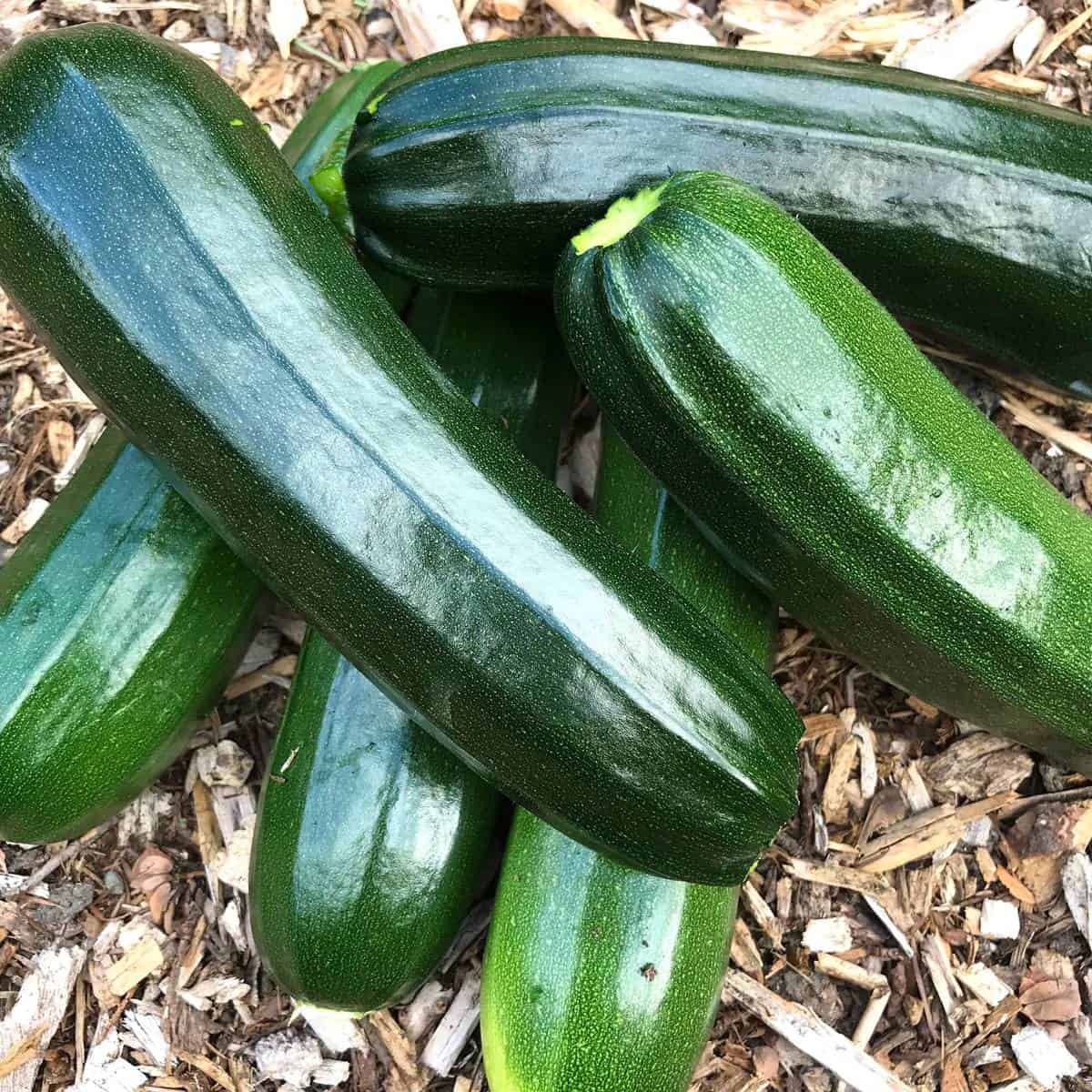
Wash the zucchini or squash, and trim off the stem and blossom end.
Step 2
Use a cheese grater of food processor to turn your zucchini into fine shreds.
Step 3
To remove excess moisture either add the shredded zucchini to a fine-mesh strainer perched over a bowl, and then press the zucchini down repeatedly with a large spoon or spatula to force some of the liquid out and into the bowl or place the shredded zucchini inside a clean lint-free towel or cheesecloth and wring it out that way.
Step 4
Pack the shredded zucchini into freezer safe containers in portions that will be used all at once (e.g. 1 or 2 cup portions) since shredded zucchini is hard to separate once frozen.
Step 5
To prevent freezer burn, fill the containers completely full - leaving as little air inside the container as possible. You can also vacuum pack or use ziplock bags. Then place in freezer for future use.
Step 6
Start by washing your zucchini or squash and trimming off the stem and blossom end. Then cut the squash into your desired shape and size.
Step 7
Next, spread out the cut zucchini pieces onto a large baking pan or other freezer friendly tray. Keep them in a single layer, touching or overlapping as little as possible
Step 8
Place the tray in the freezer for at least 2 hours or up to overnight.
Step 9
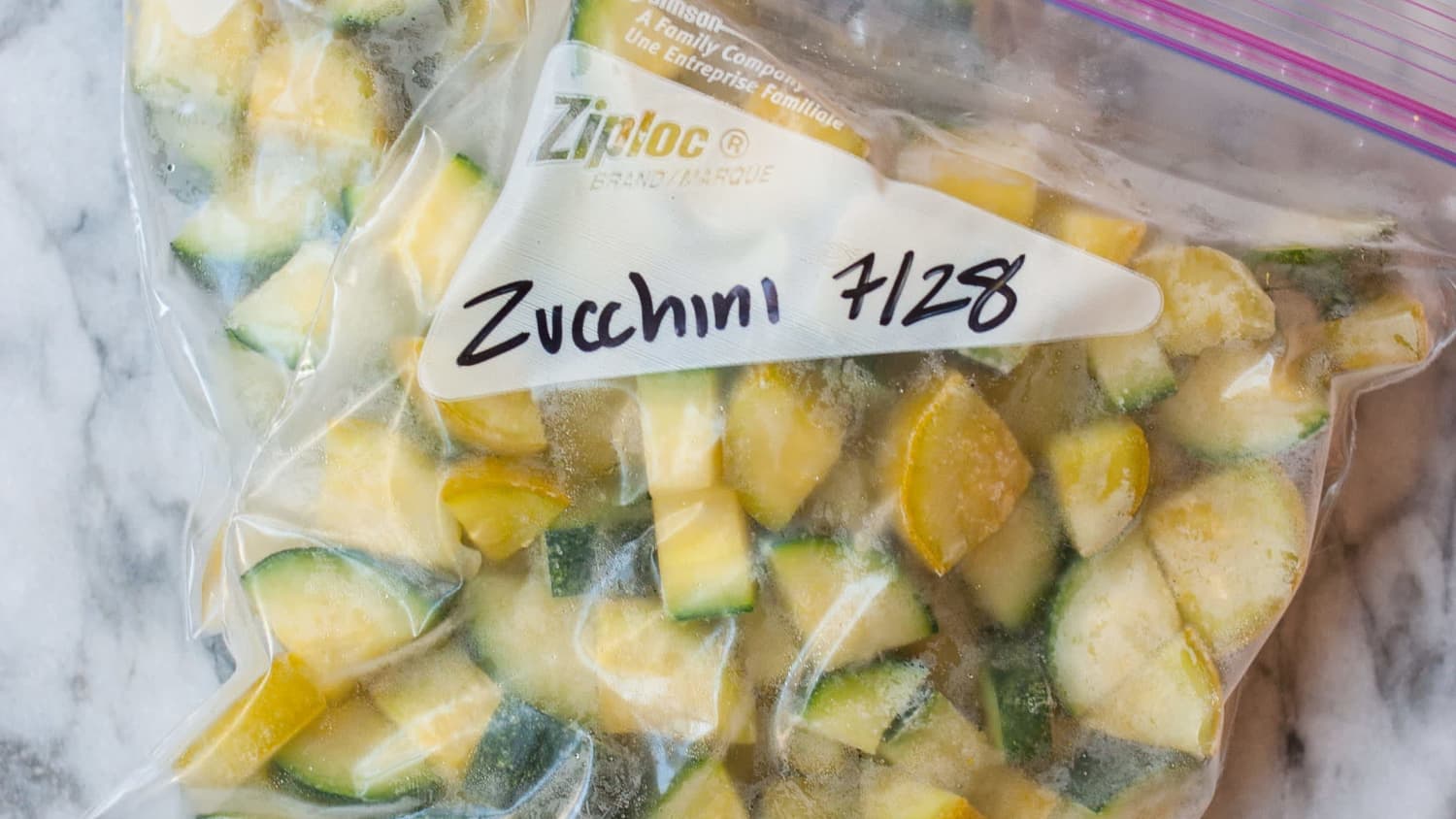
Once they’re frozen solid, quickly transfer the frozen zucchini pieces into your chosen freezer safe container for long-term storage.
Step 10
To prevent freezer burn, fill the containers completely full - leaving as little air inside the container as possible. You can also vacuum pack or use ziplock bags. Then place in freezer for future use.
Step 11
Frozen zucchini is best quality if used within 3 months, but stays good in the freezer for up to a year.
Step 12
Frozen zucchini is a welcome addition and good substitute for fresh squash in most recipes – except for those where you’d want a firm zucchini texture. It's best added to baked goods, soups, stews, chili, sauces, lasagna, quiche, or similar applications.
Step 13
There is no need to completely defrost or fully cook frozen zucchini before adding it to a recipe. As frozen zucchini thaws, it becomes soft anyways. So, all you need to do is let it heat all the way through before consuming.
Step 14
For soups, sauces, chili, and similar, I recommend adding the frozen squash near the end of the cooking time. To add frozen zucchini to bread or other baked goods, you may need to let it partially defrost in order to break up the clump of shredded bits for easy mixing.
Top similar recipes
Curated for youYour folders

 289 views
How to Cook Acorn Squash (two ways!...
rachelcooks.com
4.4
(179)
60 minutes
Your folders
 385 views
How to Freeze Zucchini
daringgourmet.com
5.0
(8)
2 minutes
Your folders
 397 views
How To Freeze Zucchini
thekitchn.com
3.7
(3)
Your folders
 172 views
How to Freeze Zucchini
iwashyoudry.com
5.0
(15)
Your folders
 213 views
How To Freeze Bananas - 3 Ways!
downshiftology.com
5.0
(1)
Your folders
 339 views
How to Freeze Avocados - 4 Ways!
favfamilyrecipes.com
5.0
(4)
Your folders
 634 views
How To Freeze Fresh Summer Fruit
thekitchn.com
Your folders
156 viewsThe Best Ways to Freeze Butternut S...
thekitchn.com
5.0
(6)
Your folders
 465 views
How to Freeze Sweet Potatoes (3 Way...
homecookbasics.com
4.9
(9)
20 minutes
Your folders
 333 views
How to Grill Salmon (two different ...
ambitiouskitchen.com
5.0
(1)
12 minutes
Your folders
 89 views
How to Make Seitan Recipe (Two Ways...
cookingforpeanuts.com
5.0
(15)
10 minutes
Your folders
/grilled-zucchini-and-summer-squash-2217583-6289-5b1058923de423003797d054.jpg) 329 views
329 viewsHow to Make Excellent Grilled Zucch...
thespruceeats.com
Your folders
 60 views
How to Freeze SoffrittoHow to Freez...
eatingarounditaly.com
Your folders
 140 views
How to freeze and reheat meatballs,...
kitchenstories.com
30 minutes
Your folders
 728 views
How to Freeze Pierogi?
polonist.com
4.5
(8)
1 minutes
Your folders
 1327 views
How to Freeze Cakes
sallysbakingaddiction.com
5.0
(8)
Your folders
 627 views
How to Freeze Strawberries
wholefully.com
5.0
(2)
Your folders
 755 views
How to Freeze Carrots
sustainablecooks.com
2 minutes
Your folders
 887 views
How to Freeze Bananas
detoxinista.com
5.0
(1)